
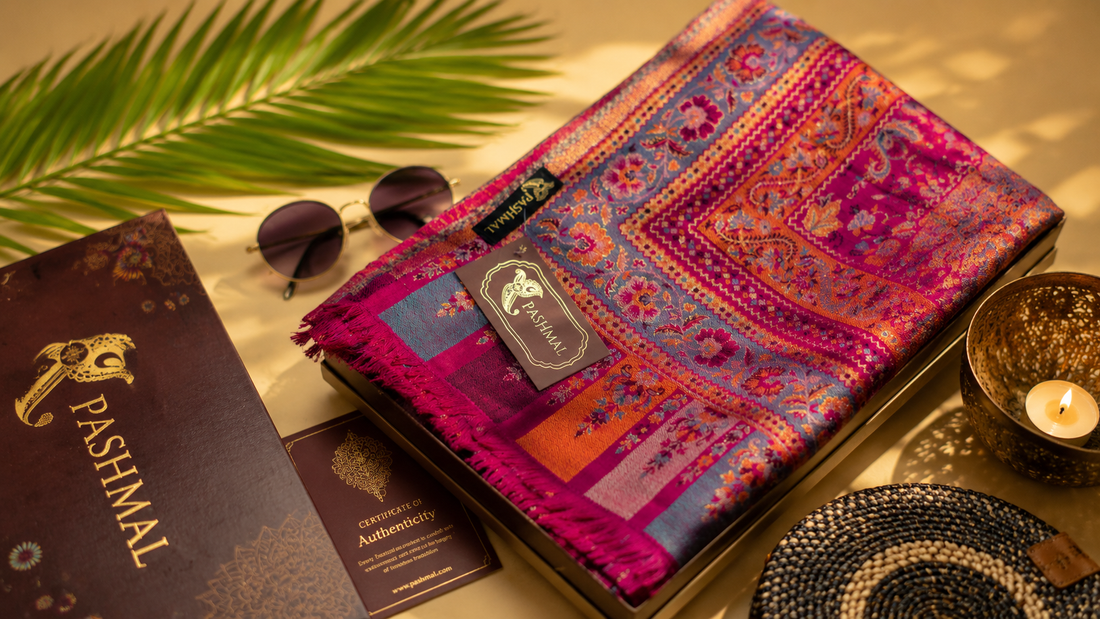
Many women hesitate to buy a pashmina shawl because they encounter confusing claims online about whether these luxury textiles are banned or restricted. For someone investing in a premium heritage piece, understanding the truth behind these claims is important before making a purchase.
The question of why pashmina shawls are banned is based on a common misunderstanding between authentic pashmina and Shahtoosh. While one represents centuries-old Kashmiri craftsmanship, the other is connected with wildlife protection concerns. This guide explains the real difference, how to identify genuine pashmina, and how to care for your shawl properly.
Are Pashmina Shawls Really Banned?
Authentic pashmina shawls are not banned. The confusion exists because many people mistakenly connect pashmina with Shahtoosh, a different luxury textile that has faced legal restrictions due to its source.
Pashmina is made from fine cashmere wool collected from the undercoat of the Changthangi goat, traditionally found in the Himalayan region. Kashmiri artisans have used this fiber for generations to create soft, lightweight, and elegant shawls.
The restriction applies to Shahtoosh, not genuine pashmina. Shahtoosh comes from the Tibetan antelope, a protected species, and its trade is restricted because of wildlife conservation laws.
A common mistake among buyers is assuming that every extremely soft and expensive shawl belongs to the same category. Checking the fiber origin and buying from trusted sources helps avoid confusion.
Why Do People Confuse Pashmina With Shahtoosh?
The confusion between pashmina and Shahtoosh mainly comes from their similar reputation. Both became known as rare luxury shawls because of their softness, warmth, and lightweight feel.
However, their sources are completely different. Pashmina comes from responsibly collected goat wool, while Shahtoosh is linked with the Tibetan antelope, whose protection led to restrictions on its trade.
Another reason for confusion is the way the term “pashmina” is sometimes used in the market. Some sellers use the name for blended or imitation fabrics, making it harder for customers to understand what they are actually purchasing.
When choosing a luxury shawl, buyers should look beyond softness alone. Fiber quality, craftsmanship, transparency, and the seller's reputation are equally important factors.
Pashmina vs Shahtoosh: Understanding the Difference
Understanding the difference between pashmina and Shahtoosh helps buyers make ethical and informed decisions.
Feature |
Pashmina |
Shahtoosh |
|
Source |
Fine cashmere wool obtained from Himalayan goats (Changthangi goat) |
Fiber obtained from Tibetan antelope (Chiru) |
|
Legal Status |
Legal luxury textile produced under ethical and regulated practices |
Restricted material due to wildlife protection laws |
|
Craft Tradition |
Known for Kashmiri weaving, hand embroidery, and traditional artisan craftsmanship |
Historically associated with fine weaving but linked with wildlife conservation concerns |
|
Modern Use |
Used for luxury shawls, stoles, scarves, and premium textiles |
Not legally traded in most countries |
Authentic pashmina represents traditional craftsmanship and heritage fashion. Skilled artisans transform fine fibers into detailed textiles using techniques passed through generations.
One detail often missed in online discussions is that owning a genuine pashmina is not about rarity alone. It is also about supporting traditional weaving communities and preserving a cultural craft.
How to Identify an Authentic Pashmina Shawl?
Buying a pashmina shawl requires careful attention because many fabrics can imitate its appearance. A genuine piece is identified through a combination of fiber quality, craftsmanship, and sourcing information.
Important signs of authentic pashmina include:
- Fine natural fibers: Real pashmina feels soft and warm without feeling heavy.
- Detailed craftsmanship: Handmade weaving and embroidery often show the human skill behind the product.
- Material transparency: Trusted sellers provide information about fiber origin and construction.
- Quality over extremely low prices: Authentic craftsmanship requires time, making unusually cheap products worth questioning.
A common buyer mistake is judging pashmina only by softness. Modern synthetic blends can feel smooth initially, but they usually do not offer the same natural warmth, breathability, or longevity.
A well-made pashmina is designed to become a long-lasting wardrobe piece rather than a seasonal purchase.
How to Wash a Pashmina Shawl Without Damaging It?
A pashmina shawl needs gentle care because its natural cashmere fibers are delicate. Incorrect cleaning methods can affect the softness, shape, and appearance of the fabric.
Many owners accidentally damage their shawls by treating them like regular wool clothing. Strong detergents, hot water, and rough washing can weaken the delicate fibers.
Follow these steps when cleaning a pashmina shawl:
- Use a mild detergent suitable for delicate fabrics.
- Wash gently without rubbing or twisting the fabric.
- Rinse carefully to remove any soap residue.
- Dry the shawl flat on a clean surface away from direct sunlight.
- Avoid ironing at high temperatures.
For heavily embroidered or valuable heritage pieces, professional cleaning is often the safest option. Proper care helps maintain the softness and craftsmanship that make pashmina special.
How to Store and Maintain Your Pashmina Shawl?
Storage is just as important as washing when it comes to protecting a pashmina. Even high-quality fibers can lose their beauty if they are exposed to moisture, chemicals, or improper handling.
Follow these maintenance practices:
- Fold the shawl instead of hanging it for long periods.
- Store it in a breathable cotton or muslin cover.
- Keep it away from direct sunlight and damp areas.
- Avoid spraying perfume directly on the fabric.
- Refold occasionally during long storage periods.
One overlooked factor is airflow. Natural fibers need breathable storage conditions, which is why plastic packaging is not ideal for long-term preservation.
With proper care, a premium pashmina can remain beautiful for years and may even become a cherished family heirloom.
Why Authentic Pashmina Remains a Luxury Heritage Choice
Pashmina is valued because it combines natural beauty, traditional craftsmanship, and cultural history. Each shawl represents the skill of artisans who have refined textile-making techniques over generations.
Unlike fast-fashion accessories, authentic pashmina follows a slower approach where quality and craftsmanship matter more than quick production.
Today, pashmina continues to complement modern wardrobes. It can be styled with wedding outfits, formal wear, festive clothing, or even simple everyday looks.
For many buyers, a pashmina shawl is not just an accessory. It is a connection to Indian heritage and a timeless piece that carries meaning beyond fashion.
FAQ's
Are pashmina shawls illegal?
No, authentic pashmina shawls are legal. The confusion comes from Shahtoosh, which is a different material associated with wildlife protection restrictions.
Why is Shahtoosh banned but pashmina is allowed?
Shahtoosh is restricted because it involves a protected animal species. Pashmina comes from Himalayan goat wool and is used legally for luxury textiles.
Can I wash a pashmina shawl at home?
Yes, but it requires gentle cleaning methods. Avoid harsh detergents, heat, and rough handling to protect the fibers.
How can I check if my pashmina is genuine?
Look for fiber quality, craftsmanship, seller transparency, and reliable sourcing information instead of judging only by softness.
How long can a pashmina shawl last?
With proper washing and storage, a high-quality pashmina can remain beautiful for many years and become a long-lasting wardrobe investment.
Conclusion
The belief that pashmina shawls are banned comes from a misunderstanding between authentic pashmina and restricted Shahtoosh. Knowing the difference allows buyers to appreciate the craftsmanship, heritage, and value behind genuine Kashmiri textiles.
If you are looking for a timeless luxury piece, choosing an authentic pashmina shawl with proper care guidance can help you enjoy its beauty for generations.


