
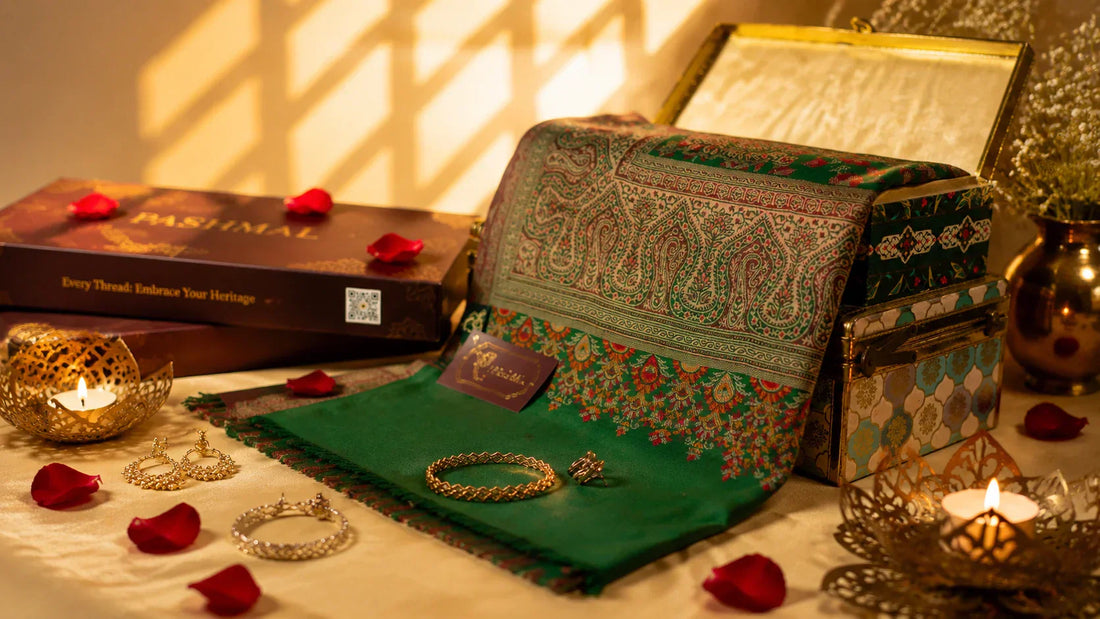
A premium shawl is not only about fabric, color, or design. Many buyers today want to know the story behind what they wear — who created it, how much skill went into it, and why certain Kashmiri shawls hold such special value. Understanding the handicrafts of Jammu and Kashmir helps buyers appreciate the artistry behind traditional textiles before choosing a piece for themselves or gifting someone special.
From intricate Kani weaving to delicate Kashmiri embroidery, these crafts represent centuries of knowledge passed through generations of artisans. This guide explores the techniques, designs, and details that make Kashmiri shawls among India’s most treasured heritage textiles.
What Makes Kashmiri Handicrafts So Special?
The handicrafts of Jammu and Kashmir are admired because they combine traditional skills, artistic expression, and careful craftsmanship. Unlike factory-made textiles, many Kashmiri crafts involve detailed manual work, with artisans spending significant time creating patterns, textures, and finishing details.
Kashmir’s textile heritage developed through centuries of cultural exchange. Persian influences, local artistry, and natural surroundings shaped many designs seen in shawls, carpets, and embroidery work.
One detail often missed by buyers is that the value of a handcrafted shawl does not depend only on the material. The complexity of the technique, the artisan's precision, and the time required to complete the design also play an important role.
Popular Kashmiri handicrafts include:
- Pashmina shawls
- Kani shawls
- Sozni embroidery
- Aari embroidery
- Tilla work
- Kashmiri carpets
- Papier-mâché art
These crafts continue to represent Kashmir’s identity while adapting to modern luxury fashion preferences.
What Is a Kani Shawl and Why Is It Famous?
A Kani shawl is a traditional Kashmiri handwoven shawl created using small wooden sticks called Kanis. Instead of printing designs on fabric, artisans weave every motif directly into the shawl, creating detailed patterns that can take months to complete.
The specialty of Kani shawls lies in their weaving technique. Each color thread is carefully placed according to the design pattern, allowing artisans to create complex floral, paisley, and nature-inspired motifs.
The Traditional Kani Weaving Technique
Kani weaving requires patience and exceptional skill. Artisans follow coded patterns that guide them through the placement of different coloured threads. This process allows even highly detailed designs to appear balanced and symmetrical.
A common misconception is that all expensive shawls are expensive because of their fabric alone. In reality, Kani shawls are valued because of the craftsmanship involved in creating their woven artwork.
The time required for production depends on factors such as:
- Design complexity
- Number of colors used
- Size of the shawl
- Artisan experience
Understanding Kani Shawl Designs
Traditional Kani shawl designs often feature:
- Paisley motifs inspired by Kashmiri art
- Floral arrangements
- Mughal-inspired patterns
- Nature-based elements
Modern Kani shawl designs combine these traditional elements with contemporary color palettes, making them suitable for both classic and modern wardrobes.
What Are the Different Types of Kashmiri Embroidery?
Kashmiri embroidery is known for its precision, elegance, and variety of stitching techniques. Each embroidery style creates a different visual effect, from delicate thread detailing to rich decorative patterns.
Sozni Embroidery: Fine Needle Artistry
Sozni embroidery is one of the most refined forms of Kashmiri needlework. Skilled artisans use fine needles to create detailed patterns, often covering selected areas of a shawl rather than the entire surface.
This technique is valued for its delicate appearance and the level of control required from the artisan.
Aari Embroidery: Detailed Decorative Patterns
Aari embroidery uses a hooked needle to create flowing patterns on fabric. It is commonly recognized for floral designs and decorative motifs that add texture and elegance to shawls.
Tilla and Crewel Embroidery
Tilla work uses metallic threads to create a royal appearance, while Crewel embroidery often features wool threads forming bold floral and nature-inspired designs.
Understanding these differences helps buyers recognize why two embroidered shawls may have very different values even if they look similar at first glance.
What Are the Famous Shawls of Kashmir?
The famous shawls of Kashmir represent different approaches to textile craftsmanship. Each type has its own character, making it suitable for different occasions and preferences.
Pashmina shawls are known for their soft texture and luxurious feel. Made from fine cashmere wool, they are appreciated for their warmth, lightweight nature, and timeless appeal.
Kani shawls are celebrated for their detailed woven patterns and traditional artistry. They are often chosen by collectors and those who appreciate heritage craftsmanship.
Embroidered Kashmiri shawls combine fine fabrics with decorative needlework, creating elegant pieces for celebrations and formal occasions.
When selecting a shawl, buyers should consider more than appearance. The technique, finishing quality, and craftsmanship behind the piece determine its long-term value.
How Can You Choose an Authentic Kashmiri Shawl?
Choosing an authentic Kashmiri shawl requires understanding the details that separate handcrafted textiles from ordinary alternatives.
Before purchasing, consider:
- Quality and feel of the fabric
- Precision of embroidery or weaving
- Finishing around edges and borders
- Consistency of patterns
- Information about craftsmanship and origin
A common mistake buyers make is judging authenticity only by price. A higher price does not automatically guarantee quality, while a reasonable price does not always indicate poor craftsmanship. Understanding the making process provides better confidence.
For luxury textiles, details often reveal the difference. Clean finishing, balanced patterns, and skilled workmanship usually indicate greater attention during production.
Why Kashmiri Shawls Make Meaningful Luxury Gifts
A Kashmiri shawl carries more than fashion value. It represents heritage, patience, and the creativity of artisans who preserve traditional techniques.
These shawls are often chosen for weddings, anniversaries, festivals, and milestone occasions because they feel personal and timeless. Unlike seasonal fashion pieces, a well-crafted shawl can remain valuable for years when cared for properly.
For buyers looking for a meaningful gift, choosing a handcrafted Kashmiri shawl offers an opportunity to share a piece of Indian textile heritage.
FAQ's
What is the difference between a Kani shawl and a Pashmina shawl?
A Kani shawl is recognized for its intricate handwoven patterns, while Pashmina shawls are known for their exceptionally soft and fine wool quality.
Which Kashmiri embroidery style is the most detailed?
Sozni embroidery is considered one of the finest Kashmiri embroidery styles because of its delicate needlework and intricate patterns.
Why are Kashmiri shawls considered luxury products?
Their value comes from a combination of fine materials, traditional techniques, artisan skill, and the time required to create each piece.
Not all shawls available in the market are handmade. Buyers should understand the weaving or embroidery technique and verify craftsmanship details before purchasing.
Are all Kashmiri shawls handmade?
Not all shawls available in the market are handmade. Buyers should understand the weaving or embroidery technique and verify craftsmanship details before purchasing.
Which Kashmiri shawl is best for gifting?
The ideal choice depends on the recipient’s style. Pashmina offers timeless elegance, while Kani and embroidered shawls provide a stronger heritage appeal.
Kashmiri shawls represent a connection between traditional craftsmanship and modern luxury fashion. Understanding the artistry behind Kani weaving, Pashmina, and embroidery allows buyers to appreciate these textiles beyond their appearance. Exploring collections from heritage-focused brands like Pashmal can help discover shawls that preserve this timeless craft while fitting contemporary lifestyles.


